
Kitesurfing in Marsa Alam: a guide for first-time visitors

Kitesurfing in Marsa Alam works well for learners and flat-water riders at the lagoon where KiteMood teaches: a coral reef shelters it, the water inside the reef is flat and there is a big area where you can stand. The school describes the wind as cross to cross-onshore, with a very high chance of blowing all year, rather than offshore. The trade-off is distance: the school says the lagoon is about an hour from Marsa Alam airport, so settle a few things before you book.
This guide comes from KiteMood, which runs a kite school on this lagoon, so it describes one spot, not the whole coast. School facts come from its course pages; climate and sightseeing facts come from published sources and are approximate.
Why a protected lagoon suits learning
After the first lesson of theory and first fly, much of early learning happens in the water: body dragging (being pulled through the water by the kite), recovering your board, then the waterstart. So the water you learn in matters.
Flat water and somewhere to stand
The lagoon is sheltered by a coral reef about 800 metres from the shore. Inside the reef the water is flat, and over the reef there are small waves, so there is flat water to learn on and some variety later. The tide changes the lagoon very little. The big standing area helps when you are just starting out.
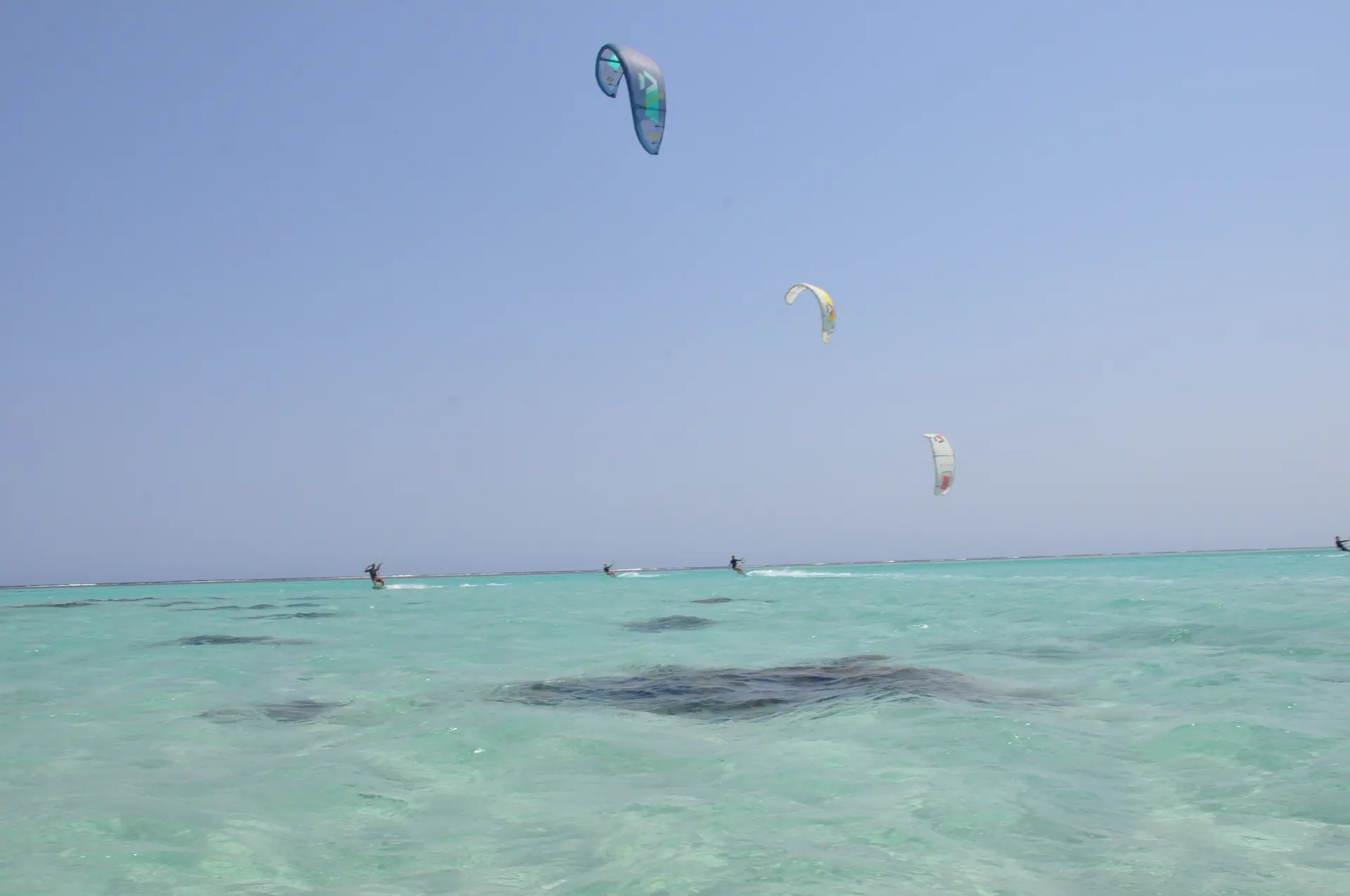
Wind from the side or from the sea
KiteMood describes the wind as cross to cross-onshore: it blows along the beach or from the sea towards it. That matters because offshore wind, which blows from land out to sea, is the direction many operators and regulators warn against, because it can carry a rider away from shore. The kitesurfing wind guide explains the terms and how to read a forecast.
The honest limits
- It is one spot. There are other kite spots around Marsa Alam. KiteMood thinks this lagoon stands out for learning, but that is the school's view, not a survey of the coast.
- Watch your feet. The school warns that dead coral on a strip of rocky sand can be dangerous if you have to cross it, and recommends shoes for beginners.
- A very high chance of wind is a chance, not a promise. Lighter days happen, as the wind section below shows.
What the setting is like
Marsa Alam is a town on the western shore of the Red Sea, in south-eastern Egypt, with a hot desert climate. KiteMood teaches in the south of the town, on a lagoon with a sandy shore and desert hills behind it. The about page describes the school and the lagoon in more detail.
Three resorts front the lagoon: Floriana Emerald Lagoon, Blue Lagoon Resort in the middle and Dream Lagoon, all run by an Italian tour operator. Other accommodation nearby ranges from tents to luxury, and most hotels are a short walk away. Plenty of kitesurfers use the spot, some of them travelling solo, so it is easy to meet people.
Heat, sun and sea
These are published climate averages, so any given week can differ. Air highs run from about 24°C in January to about 36°C in August, and January nights average about 13°C. The sea is roughly 22°C to 29°C over the year, there is about 5 mm of rain in a whole year, and UV is at its most intense from April to August. The school advises a long wetsuit all year, or a long suit or a shorty in summer. The month-by-month figures are in the best time to kitesurf in Marsa Alam, and the packing list is in what to pack for a kitesurfing holiday in Marsa Alam.
How windy is it, really?
KiteMood reports the highest chance of wind from mid-May to June and from September to mid-October, with stronger but less frequent wind from January to March and in November and December.
NASA model data for the area (2015 to 2024, averaged over a grid about 50 km wide) is more cautious. It agrees that June and September stand out, with roughly two in three days having at least four daytime hours in the 12 to 28 knot range, against about one in five in November. It also shows far fewer very strong hours than the school describes, possibly because averaging over a large area flattens local peaks. Treat both as a guide, not a forecast. The wind forecast page shows current conditions from a weather model.
What a kitesurfing day in Marsa Alam looks like
Life at the lagoon follows the wind. The school's own summary of a good day is eat, kite, sleep, repeat. Typically the wind starts to blow from around 10:00, usually gets stronger through the day (it tends to pick up around 14:00) and goes down again in the evening. When the wind is good you usually have the whole day to kite. KiteMood confirms the time of your lesson when you book, so message first with your dates.
A first lesson, step by step
- Transfer and kit. The transfer between the school and the beach is included with lessons, and kites, boards, harnesses, helmets, life vests, wetsuits and other gear are provided. Bring sun protection, and shoes for the rocky strip.
- Land first. Level 1 – Discovery is 75 minutes of theory and first fly, from a trainer kite to the quick release and landing the kite by yourself. Your first kitesurfing lesson goes into more detail.
- Then the water. Body dragging, recovering the board and the waterstart come in Level 2. Lessons are radio-assisted, so your instructor is in touch with you by radio at all times, and there are never more than two students per instructor.
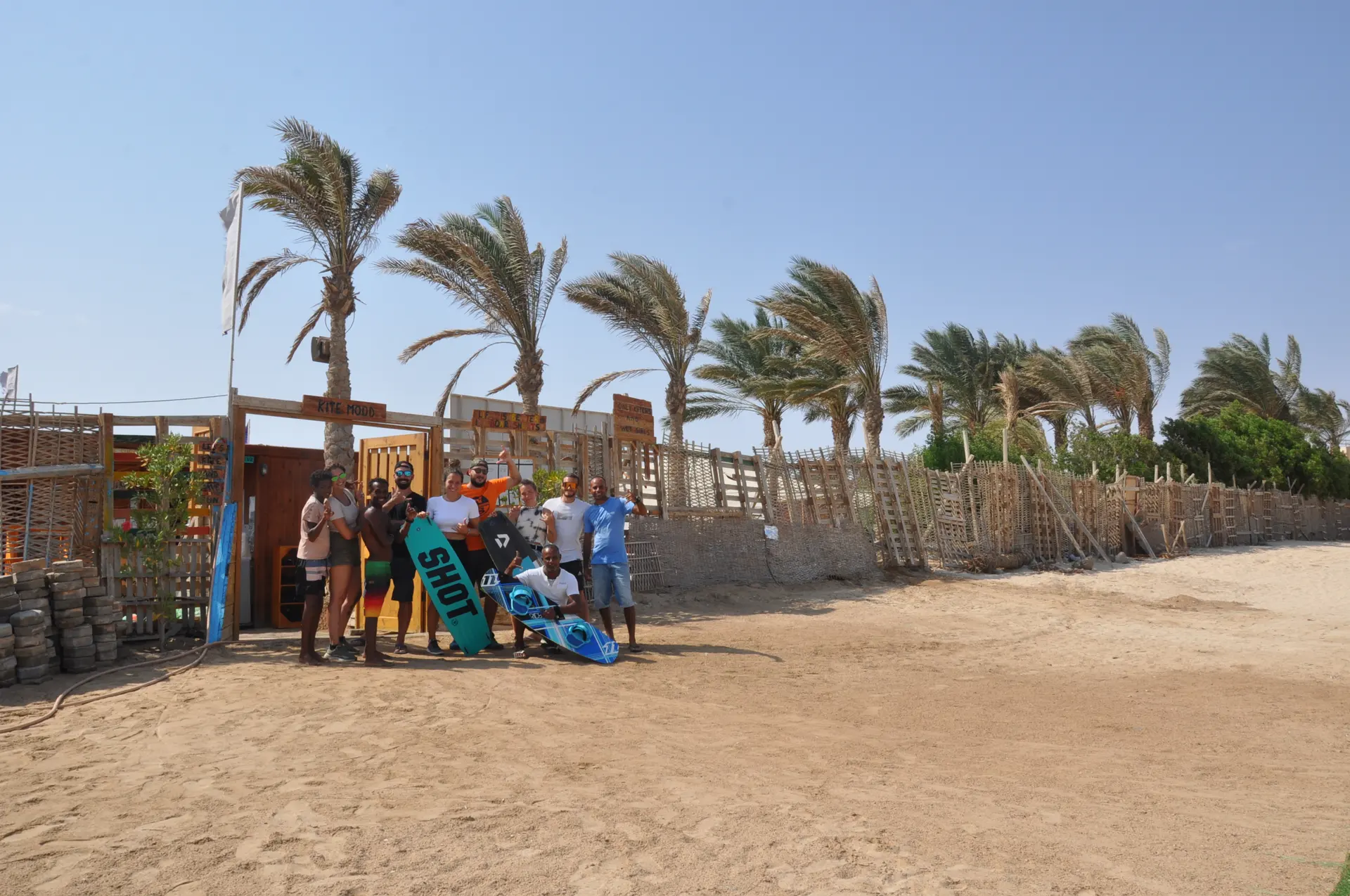
Setting realistic expectations
Do not plan on riding on day one. The 6-hour beginner course aims to finish the body-drag lesson and get you ready for the board. The page says fast learners may try the board, but most people need a third lesson to get up and ride with confidence. The 8-hour course adds a waterstart lesson and aims to complete IKO Level 2, though some people need more time. How long it takes to learn kitesurfing explains what counts as learned at each stage, and the kitesurfing courses page lists every level.
If you already ride
Supervised rental pairs the equipment with an IKO Assistant Instructor who stays with you, with boat rescue on standby, for riders who have completed IKO Level 2. To rent without supervision you need to be an independent rider who can ride upwind, and riders without an IKO Kiteboarder Card get a short assessment first. If you bring your own kit, beach use and storage covers storage, kite inflating, gear washing, launch and landing help, Wi-Fi and two rescues.
Getting there and where to stay
Plan the journey backwards from the lagoon.
- Fly into Marsa Alam. Marsa Alam International Airport, north-west of the town, takes international tourist flights, including from several European countries. Timetables change by season, so check which airlines serve it for your dates. Hurghada is a much longer drive: on published figures it is roughly 270 km from the town.
- Arrange the transfer. KiteMood says it is about one hour from Marsa Alam airport, and the airport transfer is usually arranged with your accommodation. Treat the hour as a planning figure and confirm the timing with whoever books it.
- Check entry and insurance rules at the source. Visa and entry requirements, health advice and local laws change, so use official sources. The UK Foreign, Commonwealth and Development Office publishes current Egypt travel advice, including insurance guidance (it advises cover that includes your planned activities); other nationalities should check their own government's advice. Read your policy wording to see whether kitesurfing is covered.
- Check baggage rules if you bring kit. Airlines set their own allowances and fees for kite bags, so ask before you pack.
What else to do nearby
For any trip below, check current permit and boat rules with a licensed operator, and treat wildlife sightings as possible, never certain.
- Wadi El Gemal National Park, south of the town. It has been protected since 2003 and covers roughly 7,450 km² of land and sea, with offshore islands, seagrass beds that support green turtles and dugongs, and mangroves.
- Snorkelling bays. Abu Dabbab and Marsa Mubarak are both known for green turtles. Dugong sightings are reported but never certain.
- Sha'ab Samadai, known as Dolphin House. A reef lagoon where spinner dolphins rest during the day. It is managed as a protected area, with rules that include not touching the dolphins or diving down to them.
- At the school. The services page lists extras such as a stand-up paddle board and a glass kayak, which may suit anyone in your group who is not kiting. Ask what each involves.
Questions to ask any kite school
Whichever school you choose, ask these before you pay. A good school answers plainly, and a vague answer tells you something too.
| Ask | Why it matters | A good answer |
|---|---|---|
| Who certifies the school and its instructors? | Certification shows that lessons follow a recognised teaching standard. | Names the organisation (for example IKO) and the instructor level. |
| How many students per instructor? | Your instructor's attention is limited, especially on the water. | A small, stated number. KiteMood's maximum is two. |
| How will the instructor talk to me on the water? | Voices do not carry far over wind and water. | A radio link, so you can be spoken to throughout. |
| What safety kit and rescue cover is there? | Helmets, vests and a rescue plan matter more than the scenery. See kitesurfing safety rules for beginners. | The kit is provided, and rescue is clearly arranged, by boat or by crew. |
| What exactly is included? | Transfers, kit, certification and rescues are included at some schools and extra at others. | A clear list that matches what you read online. |
| What happens if the wind is too light, too strong or too gusty on my day? | Policies differ, and it is better to know before you pay. | A plain rule on moving or changing the lesson. |
| What are the age, swimming and health requirements? | They vary by school and by lesson. | Stated clearly. For health questions, ask your doctor. |
KiteMood's pages state an IKO-approved school with instructors trained and certified by IKO, radio-assisted lessons, a maximum of two students per instructor, and helmets, life vests, wetsuits and other gear provided. Minimum age, swimming requirements and what happens in light wind are not set out there, so ask when you contact KiteMood and get the answer in writing.


