
Kitesurfing vs wing foiling: which should you try first?

In the kitesurfing vs wing foiling choice, start with kitesurfing if you want a structured, level-by-level course and a wide wind range, and start with wing foiling if you want to glide in lighter wind without lines or a kite overhead. On a short trip, learn one sport properly and add the other as a rental or a coached session.
The two sports get there differently. A kitesurfer flies a large kite on lines and is pulled along on a board. A wing foiler holds an inflatable wing in both hands, with no lines at all, and rides a board with a hydrofoil underneath that lifts it clear of the water once it is moving.
At KiteMood the structured, IKO level-by-level path is kitesurfing. Wing foil gear is available to rent, and the school lists foiling courses and coaching on site, so trying both on one trip is realistic. Most online comparisons come from shops that sell one sport or the other, so this guide treats every number as a rule of thumb and says plainly where the evidence is thin.
How the two sports work
Kitesurfing: a kite on lines
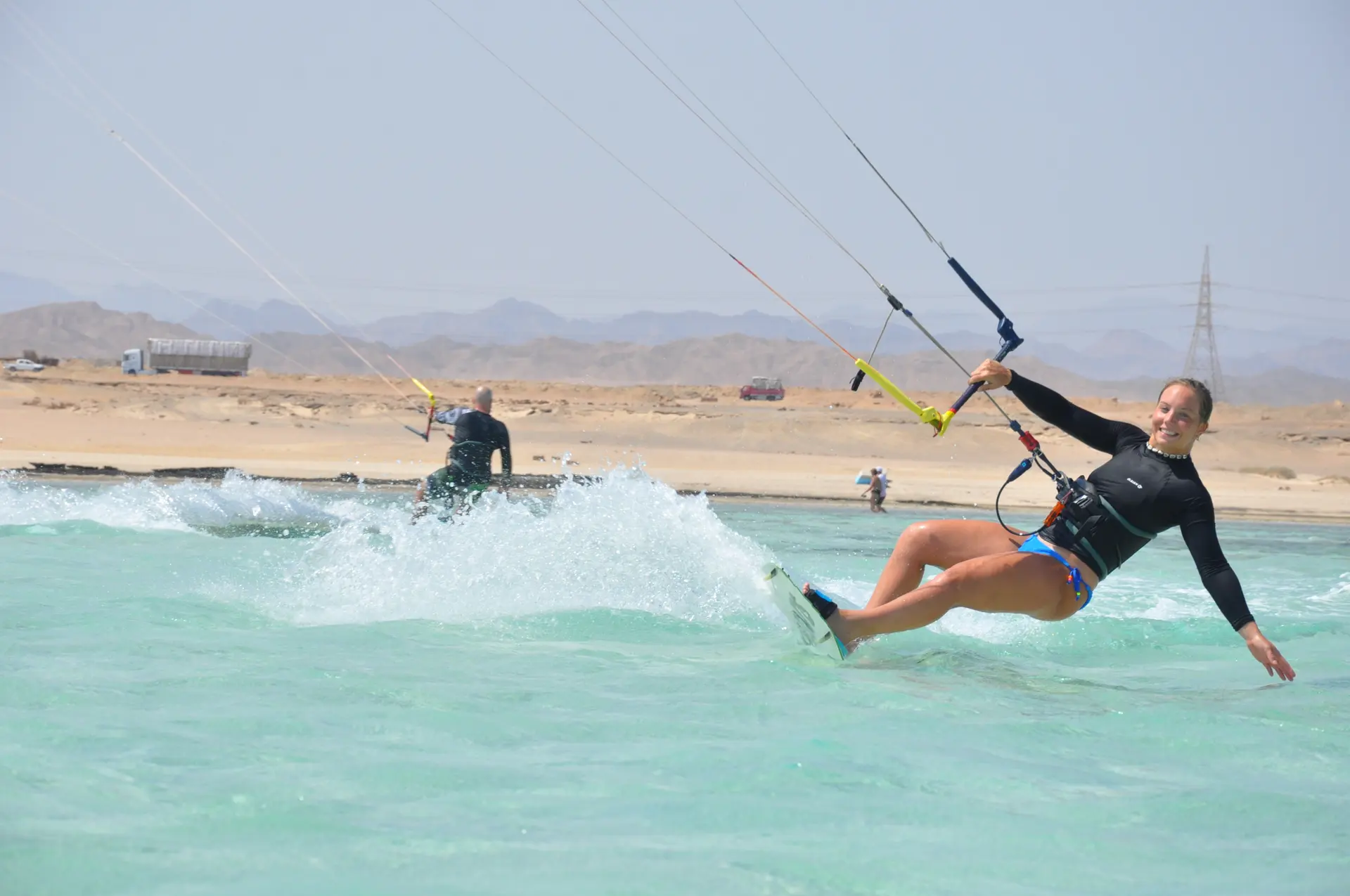
The rider holds a control bar that is connected by lines (typically about 20 m long) to a large inflatable kite, and the bar hooks onto a harness. The kite does the pulling. The rider steers it and stands on a board, usually a twintip, which is the easiest type to learn on. Most riders use kites of roughly 7 to 12 m², with bigger sizes for lighter wind and heavier riders.
The bar also carries the safety systems: a quick release that cuts the kite's power and a leash release that disconnects you from the kite completely. The kitesurfing gear guide explains each piece.
Wing foiling: a wing in your hands, a board that flies
A wing foiler holds the wing by its handles, so there are no lines, no bar and no kite overhead. The board carries a foil: a mast with wing-shaped hydrofoils beneath it. As you build speed the foil creates lift and the board rises above the surface, which is why wing foiling feels like gliding rather than ploughing through the water.
Wings are smaller than kites, typically about 2.2 to 9 m². In its modern form the sport is young, taking shape around 2018 and 2019, so kit and teaching methods are still developing.
Side by side
| Kitesurfing | Wing foiling | |
|---|---|---|
| Power source | Kite on lines, flown from a bar | Wing held in your hands, no lines |
| Board | Usually a twintip, ridden on the water | A foil board, ridden above the water |
| Wind, rule of thumb | Roughly 10-12 knots and up for most twintip riding | From roughly 8 knots (sources differ) |
| First skills | Kite control, body drag, waterstart | Wing handling, board balance, foil control |
| Strong suit | Wide wind range with the right kite size, jumps, long runs | Lighter wind, smooth glide |
How much wind do you need?
Wing foiling generally starts working at lower wind speeds. A foil moves through the water with far less drag than a board, so less power keeps you going, which is why retailers present it as the light-wind option.
The numbers below are rough, and the sources disagree with each other:
- Wing foiling: wings are reported to get a foil board planing from about 8 knots. One wing-size chart lists a 6 m² wing for roughly 8 to 18 knots and a 4 m² wing for roughly 14 to 30, while a vendor guide puts the practical window nearer 12 to 20 knots.
- Kitesurfing: most twintip riding works from roughly 10 to 12 knots upwards. One manufacturer's beginner-to-intermediate guideline covers about 10 to 28 knots by changing kite size, for example 12 to 17 m² at 10 to 13 knots and 6 to 10 m² at 23 to 28 knots, depending on rider weight.
The wind guide explains knots, gusts and kite size in more detail.
What the data says about Marsa Alam
KiteMood describes the wind at its lagoon as cross to cross-onshore, with a very high chance of wind all year, usually starting around 10:00 and picking up around 14:00. For a neutral comparison between months, NASA model data for the area (2015-2024, a grid of roughly 50 km, daytime hours only) shows that about nine daytime hours in ten reach 8 knots or more in June, August and September, against about two in three in November and December. The share at 12 knots or more varies far more, from roughly one in five hours in November to nearly two in three in September.
The gap is widest in the quietest months. In November, about two in three model hours reach 8 knots, but only about one in five reaches 12, so a sport that works from about 8 knots would have far more usable hours than one that needs 12. This is a model average over a large area at 10 m height, not a measurement at the lagoon, so use it to compare months with each other, not to expect particular conditions. The best time to kitesurf in Marsa Alam guide goes through the year, and the wind forecast page gives a live reading, which also comes from a weather model.
Learning curve and safety
Which is easier to learn?
No neutral comparison of learning times seems to exist, in either direction. Retailers and wing-sports media commonly say wing foiling is easier to start: there are no lines to manage, the kit is lighter and a wing can simply be dropped onto the water. The same sources point out the catch. The first days on the foil are demanding, because you are learning to balance on a board that rises above the water and reacts to small shifts of weight.
Kitesurfing has a different hurdle. You first learn to control the kite and its safety systems, then body drag (being pulled through the water by the kite without a board), and only then the waterstart, which is getting up on the board. At KiteMood the 6-hour beginner course stops at body dragging and gets you ready for the board, while the 8-hour course adds the waterstart lesson and aims to complete IKO Level 2. How long it takes to learn kitesurfing puts the ranges in context.
Treat any promise of riding in a couple of hours, in either sport, with caution.
Safety: different hazards, no clear winner
Both sports have real hazards, and they are not the same ones.
- Kitesurfing: the kite makes power on lines, and accidents are commonly reported to happen on land while launching and landing. That is why lessons begin with wind and hazards, safety systems and a small trainer kite, and why the quick release and self-landing are taught in the first stage.
- Wing foiling: the foil is rigid and can injure at any skill level, so clubs and retailers recommend a helmet, an impact vest or buoyancy aid, footwear and lessons, starting in calm water with moderate side or side-onshore wind.
- Both: avoid offshore wind, which can carry you away from the shore if something fails, and learn with a qualified instructor.
No neutral injury comparison appears to exist, so this guide does not claim that one sport is safer. The safety rules guide covers the kitesurfing side in detail.
Which should you try first?
Start with kitesurfing if you
- want a structured, level-by-level course: KiteMood's lessons follow IKO guidelines, and your IKO certification is included once you complete a level;
- are drawn to jumps, speed and long downwind runs;
- plan to ride on your own later, since unsupervised kite rental needs an independent rider who can ride upwind.
Start with wing foiling if you
- like the idea of gliding and the thought of lines and a kite overhead puts you off;
- travel to places where the wind is often light or unreliable;
- would like short sessions on rented gear (ask about foiling coaching first).
Can you do both?
Yes: they are separate skills, and some riders switch between a kite and a wing depending on the wind. Wind sense carries over: reading the wind, knowing which directions are safe, and respecting other water users. There is also a hybrid, kite foiling, which means a hydrofoil board ridden behind a kite, usually described as hard to ride but useful in light wind. KiteMood's advanced kitesurfing sessions cover new disciplines, including hydrofoil.
On a one-week trip, learning one sport properly is usually a better use of your time than half-learning two. Pick one for your lessons, then add the second as a rental or a coached session.
What KiteMood offers
KiteMood is an IKO-approved kitesurfing school on a protected lagoon in the south of Marsa Alam, giving kite lessons since 1998. Inside the reef, about 800 metres from the shore, the water is flat, there is a big standing area and the tide changes very little. Calm water is what clubs and retailers recommend for first wing foil sessions, and the school describes its wind as cross to cross-onshore.
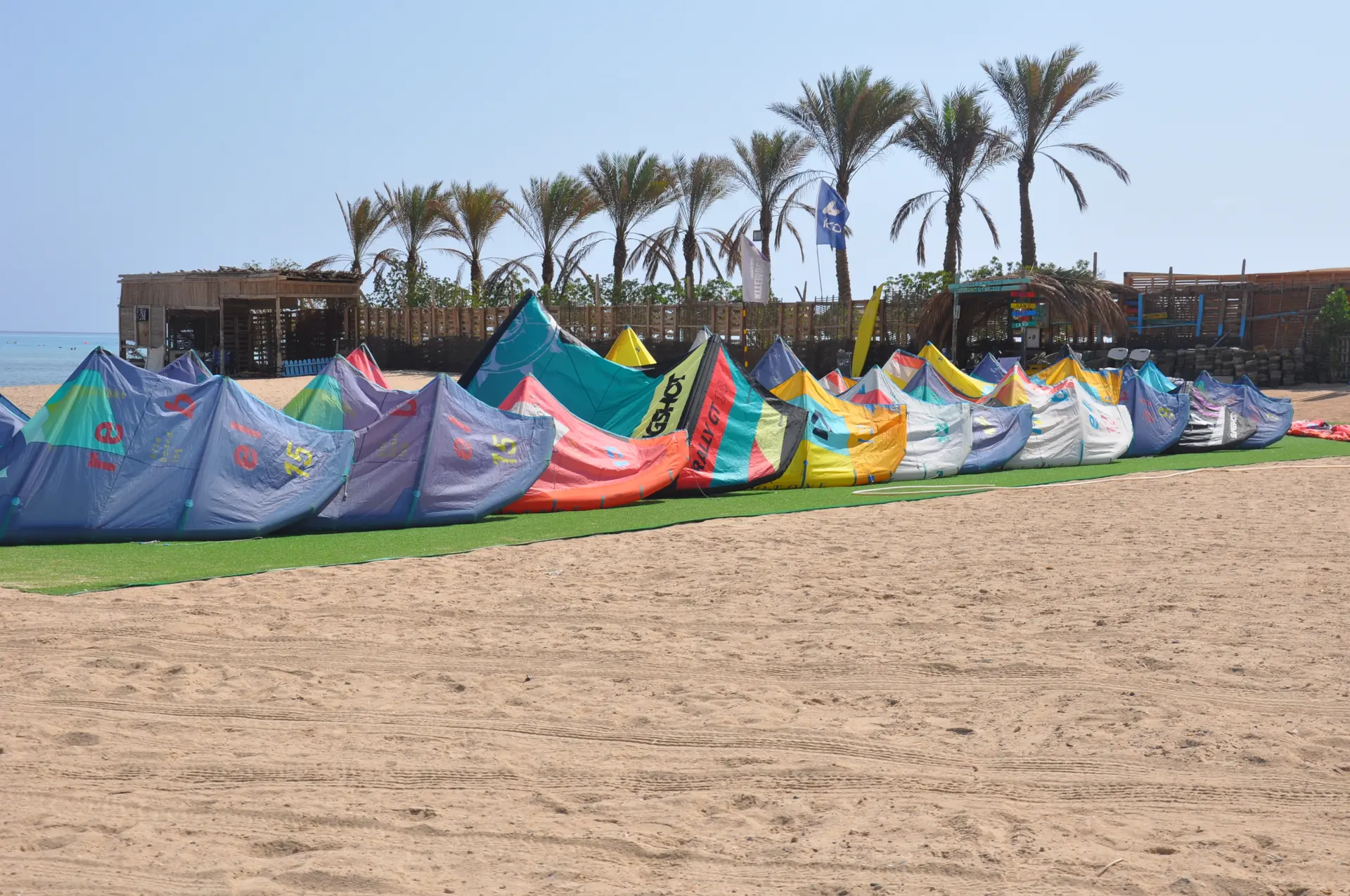
- Kitesurfing lessons: from the first Discovery lesson through the 6-hour and 8-hour beginner courses. See all kitesurfing courses.
- Wing foiling: foiling courses, coaching and equipment are available on site. You can rent the complete set (wing, board and foil), the board and foil, the foil only or the wing only. The foiling page has the details and the rental page lists the prices. Tell the team your level and what you want to learn, and ask what the foiling coaching covers.
- Kite rental after your lessons: to ride without supervision you need to be an independent rider who can ride upwind, there is a deposit, and without an IKO Kiteboarder Card you take a short assessment first. If you have completed IKO Level 2, supervised rental gives you an IKO Assistant Instructor who stays with you, with boat rescue on standby.
Questions to ask before you book either sport
- Which level or skills will I finish, and how is progress judged?
- What equipment, helmet and impact or buoyancy protection is included?
- Is an instructor in radio contact, and is there rescue cover on the water?
- How are lessons rescheduled if the wind is too light or too strong?
For kitesurfing lessons, KiteMood's pages cover IKO levels, helmets and life vests, and radio-assisted lessons, with boat rescue on standby for supervised rental, but they do not set out a weather policy, so ask about that one. For foiling, ask what the courses and coaching cover, because the pages do not spell it out.
Neither sport is better in general. Choose by the wind you expect, what you want to feel on the water and the instruction available, try the other one later, and message the team if you want help planning it.


